Flexible IT Services Contracts for Unpredictable Budgets
Your IT budget has a leak, and it isn't inflation.
Speak to an expert
IT budgets are under more pressure than they've been in years, and most cost-cutting conversations reach for the same few levers: vendor consolidation, headcount freezes, delayed refresh cycles. Those moves treat the symptom. They rarely touch the real driver of unplanned IT cost, which sits inside the contracts themselves — in the assumptions baked into every rate card and change-order clause. Before the next budget review, it's worth understanding where that cost hides, and why the fix isn't a lower price, but a different kind of agreement.
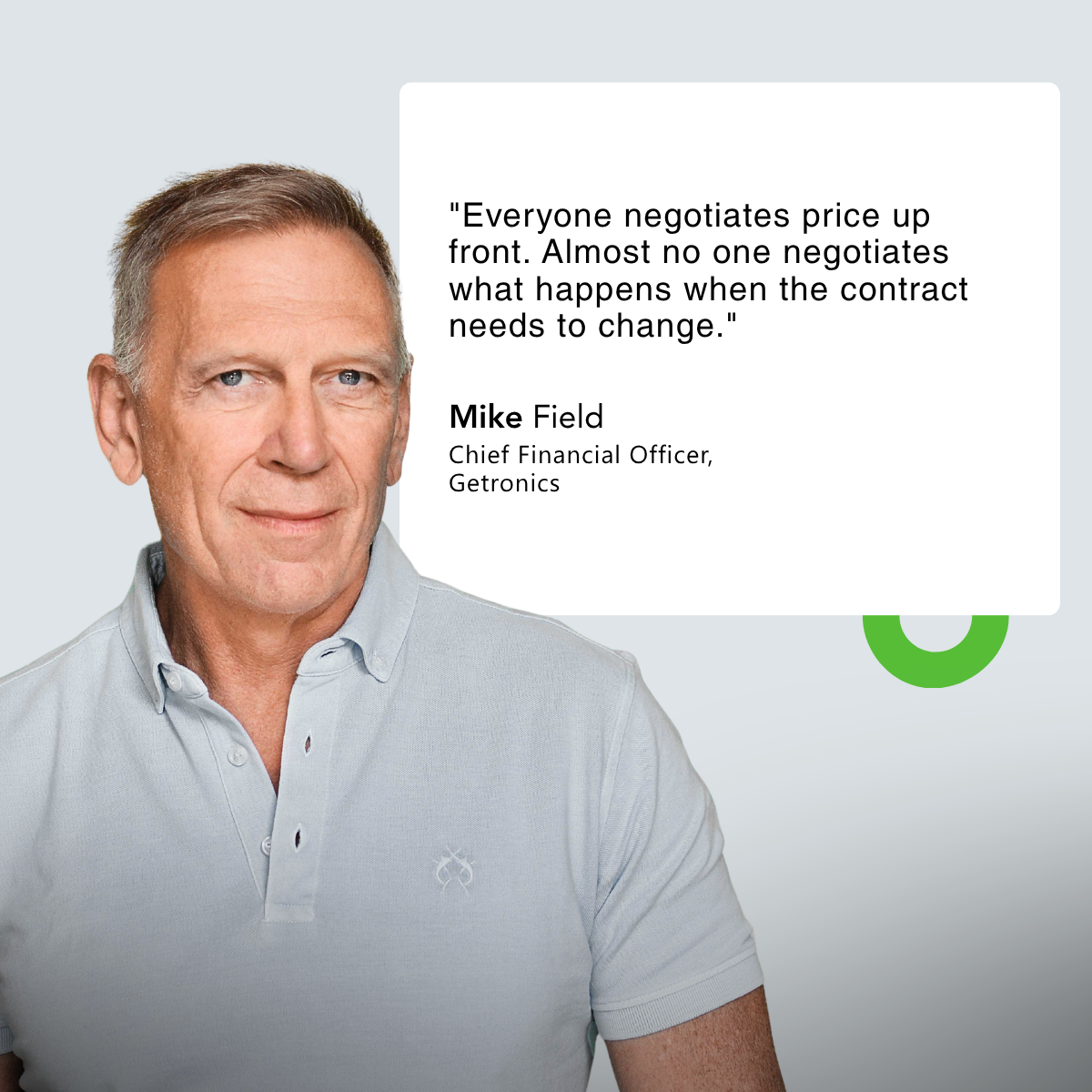
Everyone negotiates price up front. Almost no one negotiates what happens when the contract needs to change.
Inflation is squeezing operating margins. Rates remain elevated. Geopolitical fragmentation is creating supply chain uncertainty no spreadsheet model predicted two years ago.
Every CIO is hearing the same thing from their CFO: justify every line of spend.
It is the right question. Most IT leaders are looking for the answer in the wrong place.
The instinct right now is to treat IT spend as a line to cut. Consolidate vendors. Freeze headcount. Defer infrastructure refresh.
Understandable. But it leaves the biggest cost driver untouched: the structure of the contracts themselves.
When only 43% of organizations report full visibility across their technology estate, the majority are operating blind, and that blindness is exactly the condition in which contract costs accumulate unchallenged. (Source: Flexera 2025 State of ITAM Report)
The real differentiator isn't price. It's rigidity.
Commodity providers sell standard packages — one price band, one delivery model, applied no matter what you need.
The mismatch shows up later: overage charges, change orders at project rates, escalation clauses buried in schedule three.
In a zero-rate world, that variance was tolerable. In this environment, a 15% overrun isn't a rounding error. It's a board conversation.
Flexibility built in, not bolted on
At Getronics, flexibility isn't something we offer when a client complains. It's structural. One overarching agreement, the GWA Charter, carries the terms that don't need to change deal to deal. Underneath it, a short Work Order — often just 2 pages — sets out only what's specific: delivery model, billing model, scope. More complex services get a more detailed Work Order, but the underlying structure stays the same.
The heavy lifting happens once, at the Charter level. Each engagement then flexes — staff augmentation, managed services, variable or fixed pricing — without renegotiating the whole relationship. Compare that to the commodity model, where "flexibility" usually just means a change order at a new rate.
That's the real difference between Getronics and the large commodity providers: they treat every change as a fresh negotiation, at a new rate, on their timeline. Because delivery and billing terms are already agreed under the Charter, we can move fast — new work gets agreed in days, not weeks, at rates already on the table, rather than reopening the whole relationship.
Proof in practice: Indra Group
Indra Group is a leading global company in defence, transport and digital transformation sectors, with operations in over 140 countries. Indra is a Getronics Global Workspace Alliance (GWA) partner; together, Getronics and Indra deliver services to Indra's own customers.
Every engagement delivered through Indra gets its delivery and billing model determined case-by-case, shaped by what that Indra customer needs. That's only possible because of the scale behind it: Global Services Delivery, the GWA network, and Getronics' own global finance apparatus.
Two moments show what that's worth:
When plans changed: an Indra client required a network upgrade across production sites in Germany on a compressed timeline. Thanks to established governance and local field capability, Getronics was able to incorporate the work into the existing contract and deliver within the required timeframe, avoiding the complexity of starting a new engagement.
When the deadline wasn't movable: in 2024, Getronics went from signed contract to live delivery for the Indra Elections Business Unit, across 28 countries, in six weeks. A federal election date doesn't move. It didn't need to.
Neither outcome is possible under a contract that requires a full renegotiation every time scope shifts.
The question to ask your current provider
Not "Can you match this price?"
Ask: "What would it actually take to change your delivery model or billing structure mid-contract?"
If the answer involves a change order, a new rate card, and a multi-week negotiation, that's the cost hidden in the process. The impact isn't just financial — it's the time and friction required to adapt when your business needs change.


