Amélioration de l'efficacité des aéroports grâce à un contrôle des opérations en temps réel
Les aéroports exploitent certaines des infrastructures physiques les plus complexes au monde. Des systèmes de traitement des bagages aux contrôles de sécurité, en passant par l'éclairage, la ventilation et la gestion des flux de passagers, des milliers de systèmes interconnectés doivent fonctionner sans faille pour assurer le bon déroulement des opérations.

Les aéroports exploitent certaines des infrastructures physiques les plus complexes au monde. Des systèmes de traitement des bagages aux contrôles de sécurité, en passant par l'éclairage, la ventilation et la gestion des flux de passagers, des milliers de systèmes interconnectés doivent fonctionner sans faille pour assurer le bon déroulement des opérations.
Pour gérer cette complexité, il faut disposer d'une visibilité en temps réel sur l'ensemble des systèmes opérationnels – ce que de nombreux aéroports ont encore du mal à mettre en place.
La nécessité d'une vue d'ensemble unique
Les aéroports et leurs infrastructures sont en constante expansion, que ce soit par l’intégration de nouveaux aéroports à leur réseau ou par la construction de nouveaux terminaux visant à optimiser la circulation des passagers. Ces deux processus impliquent des mises à jour régulières au niveau des opérations et l’introduction de nouveaux composants dans un écosystème déjà assez complexe. À cela s’ajoutent de nouvelles questions, telles que la manière de faire communiquer le système de ventilation avec l’éclairage, ou le tapis à bagages avec les caméras de sécurité. Sans oublier la maintenance de chacun de ces systèmes, qu’il faut également prendre en compte.
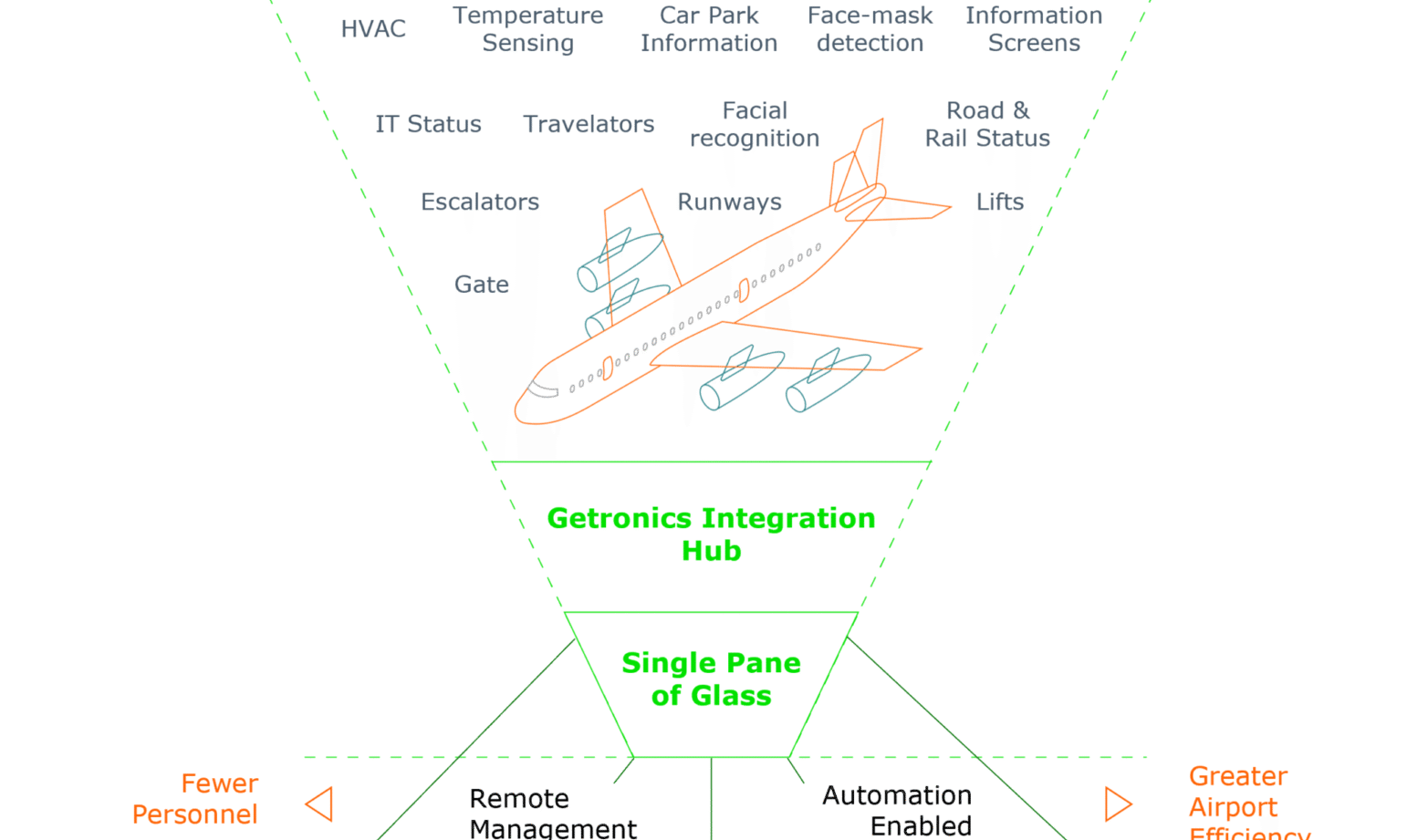
Fort de près de deux décennies d’expérience dans l’accompagnement de plus de 50 aéroports dans leur transformation et leur optimisation, nous avons pu constater ces défis de nos propres yeux. Il apparaît aujourd’hui nécessaire de mettre en place une plateforme de contrôle intégrée et centralisée afin de fournir une console de gestion qui présente les données issues de tous leurs systèmes sur un seul et même écran, ce que l’on appelle également une solution « à fenêtre unique ».
Face à la diversité des systèmes proposés par différents fournisseurs, cette intégration permet aux aéroports de les gérer plus efficacement, d'offrir une expérience fluide aux passagers et de se développer davantage à mesure qu'ils continuent de croître.
Optimiser les opérations grâce aux données – Avant et après la pandémie de Covid-19
De nombreux exploitants d'aéroports s'orientent donc vers une approche dite du « tableau de bord unique » : une plateforme opérationnelle unifiée qui regroupe les données provenant de plusieurs systèmes et les présente dans un tableau de bord centralisé.
Chaque composant – généralement acquis et mis en œuvre de manière isolée par rapport aux autres – est intégré au sein d’une plateforme unique. Grâce à la collecte de ces données, les aéroports peuvent bénéficier de rapports réguliers sur l’état de chaque système afin de comprendre les schémas de comportement, de résoudre rapidement les problèmes en cas de défaillance, de garantir un fonctionnement optimal et d’offrir une expérience passager d’exception.
Pendant la pandémie de COVID-19, par exemple, la baisse du trafic passagers a contraint les aéroports à fonctionner avec des équipes réduites sur place. Les capacités de surveillance et de contrôle à distance ont permis aux ingénieurs de diagnostiquer et de résoudre les problèmes sans être physiquement présents à l'aéroport. Face à la baisse du trafic passagers et afin d'assurer la sécurité de leur personnel, nous avons pu mettre en place des solutions de contrôle et de maintenance à distance, permettant ainsi aux ingénieurs de résoudre les problèmes depuis leur domicile.
Des objectifs ambitieux en matière de développement durable et d'énergie
En tant que principaux pôles de transport, les aéroports sont tenus de respecter un certain nombre de normes et de réglementations internationales, notamment celles relatives à la consommation d'énergie.
Heureusement, les solutions de Getronics permettent aux exploitants d'aéroports de répondre à ces exigences en matière d'efficacité énergétique en interconnectant et en surveillant chaque composant, tout en rationalisant la collecte de données pour faciliter l'établissement de rapports. Ces données permettent aux clients d'anticiper les résultats et de planifier à l'avance en s'appuyant sur les comportements actuels.
Par exemple, nous aidons l'un de nos clients à déployer des bornes de recharge électrique dans des parkings, en estimant la demande à partir des données de tendance des dernières années.
En bref : les avantages d'une plateforme de contrôle en temps réel
Prenons, par exemple, la logistique de débarquement des passagers : il faut s’assurer que l’avion est correctement amarré à la passerelle, que les systèmes de climatisation et d’éclairage de la passerelle fonctionnent correctement, et que les flux de sortie des passagers sont activés. Tout cela implique de coordonner divers éléments, tels que les portes anti-retour, les tapis roulants, les escaliers mécaniques, les ascenseurs, l’éclairage et la climatisation, afin d’offrir la meilleure expérience possible aux passagers tout en garantissant une utilisation efficace de l’énergie.
Grâce à l'adoption d'une approche « tableau de bord unique », la gestion des opérations aéroportuaires gagne en efficacité. Cela permet notamment :
- Une infrastructure sécurisée et fiable
- Standardisation à l'aide de modèles de contrôle pour les fournisseurs existants et actuels, à mesure que vous vous développez ou que vous adoptez de nouveaux systèmes
- Assurer un soutien efficace et une maintenance prévisible de l'ensemble des systèmes et des opérations aéroportuaires, afin d'éviter les temps d'arrêt
- L'analyse des données et la production de rapports précis favorisent un processus décisionnel plus éclairé
- Réduction de l'empreinte carbone afin d'atteindre les objectifs de développement durable, ainsi que la mise à disposition de données précises et d'analyses des tendances pour étayer les rapports de développement durable
- Moins d'efforts manuels et moins d'erreurs humaines
- Une expérience client améliorée à chaque point de contact
À mesure que les infrastructures aéroportuaires continuent de se développer et que les attentes des passagers évoluent, la visibilité opérationnelle en temps réel prendra une importance croissante. Les plateformes de contrôle intégrées permettent aux exploitants aéroportuaires d'améliorer leur efficacité, d'optimiser l'expérience des passagers et de répondre aux exigences croissantes en matière de développement durable.


